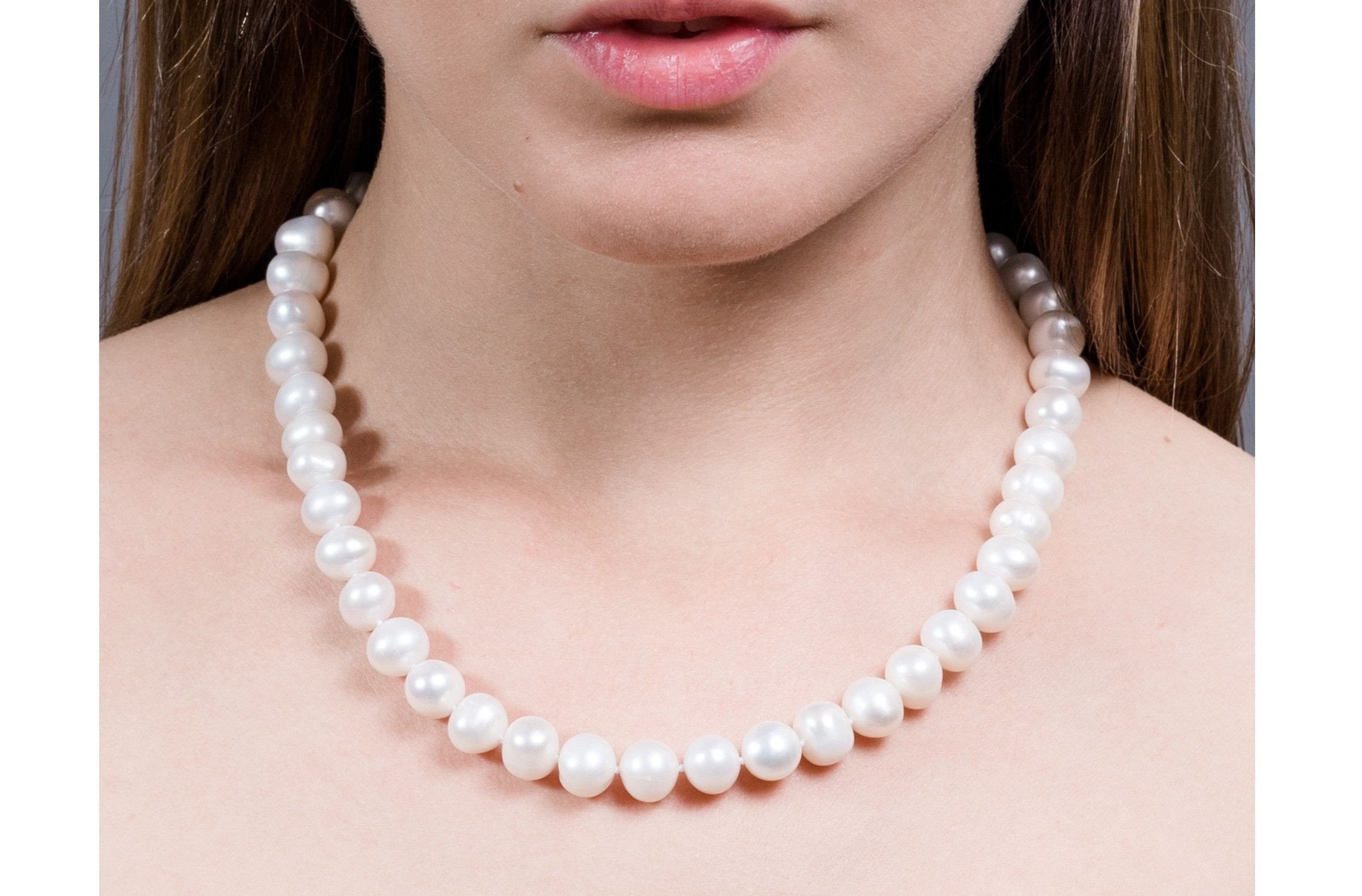
Pearls are the only gem grown inside a living animal, and there is no lab handing out official pearl grades the way there is for diamonds. What the trade shares instead is a vocabulary: eight things every farm, dealer and jeweler looks at. Learn them and you can judge a strand on what it is rather than on the letters printed on the tag.
They are listed here roughly in order of how much they affect what you see. Each one comes with a test you can run yourself, in daylight, without equipment.
1. Luster
Luster is the brightness and sharpness of light reflecting off a pearl and returning from the nacre layers beneath. It is the most important factor by a wide margin — a modest, slightly off-round pearl with excellent luster will always look more beautiful than a perfectly round chalky one.
The window test: stand a few feet from a window on an overcast day and look at the reflection on the pearl.
- Excellent — the window frame reflects sharply, with bright highlights and dark contrast.
- Good — bright reflection, edges slightly soft.
- Fair — you see light but no defined shape.
- Poor — matte, chalky, golf-ball white.
For a deeper look at how nacre creates that mirror finish, read our guide to pearl luster.
Fine pearls also show orient: an iridescent play of color that appears to sit just under the surface, caused by light refracting through stacked aragonite platelets.
2. Surface quality
Because pearls grow organically, small marks are normal and expected. What matters is quantity, depth and visibility at normal viewing distance.
- Clean — 95%+ of the surface unmarked; any flaws need close inspection to find.
- Lightly blemished — a few small pits or spots, often near the drill hole.
- Moderately blemished — visible marks at arm's length.
- Heavily blemished — pitting, ridges, or cracks that can affect durability.
Shallow pinpricks are cosmetic. Cracks, chips and exposed nucleus are structural and should be avoided at any price.
3. Shape
Roundness is rare, and rarity sets price — but shape is also the most personal factor.
- Round — rolls in a straight line; the classic and most expensive.
- Near-round — very slightly out of true; visually round when worn.
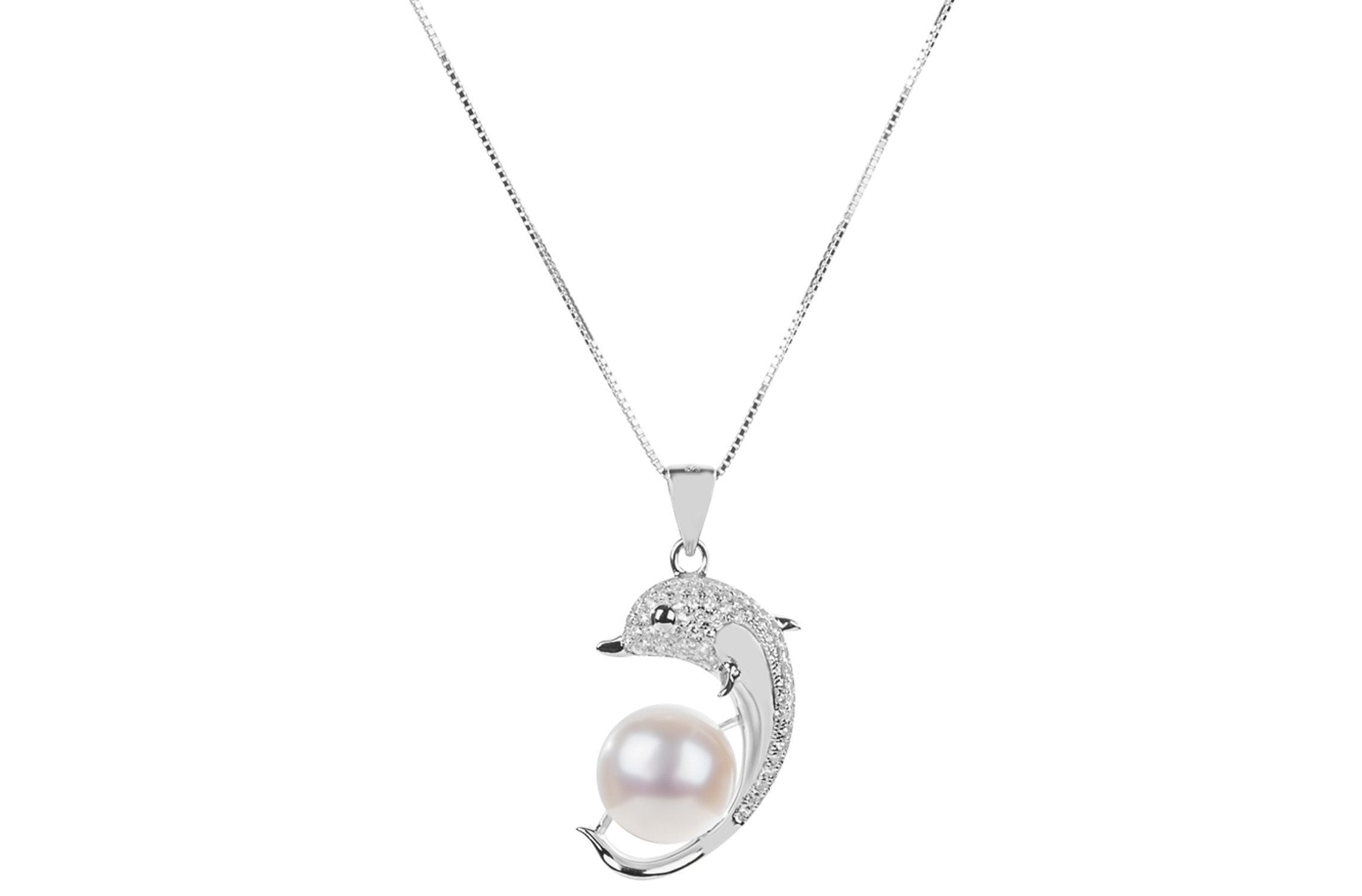
- Oval, button, drop — symmetrical shapes prized for earrings and pendants, where a drop hangs beautifully.
- Baroque and keshi — free-form, sculptural, often with exceptional luster because they are solid nacre. Excellent value and increasingly the modern choice.
- Circled — grooved rings around the body; a distinctive, characterful look.
4. Size
Pearls are measured in millimetres across the diameter (drops list two dimensions). Freshwater pearls typically run 5–10mm; above 11mm they become genuinely scarce because the mollusk must be kept alive for years longer. Price rises steeply rather than proportionally with size.
For scale: 6–7mm reads delicate and everyday; 8–9mm is the classic strand size that photographs well; 10mm and up makes a deliberate statement.
5. Color and overtone
Color has three parts:
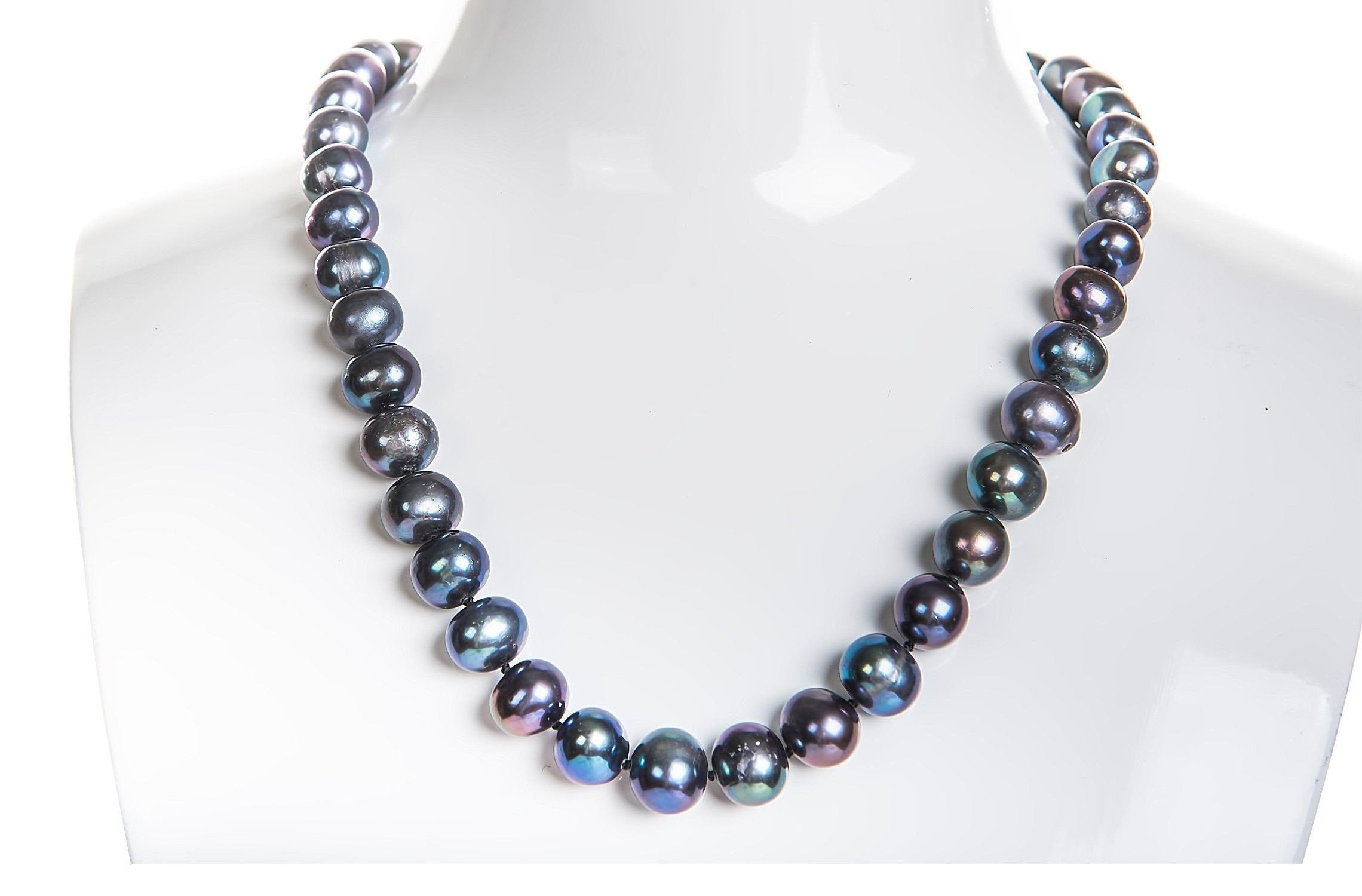
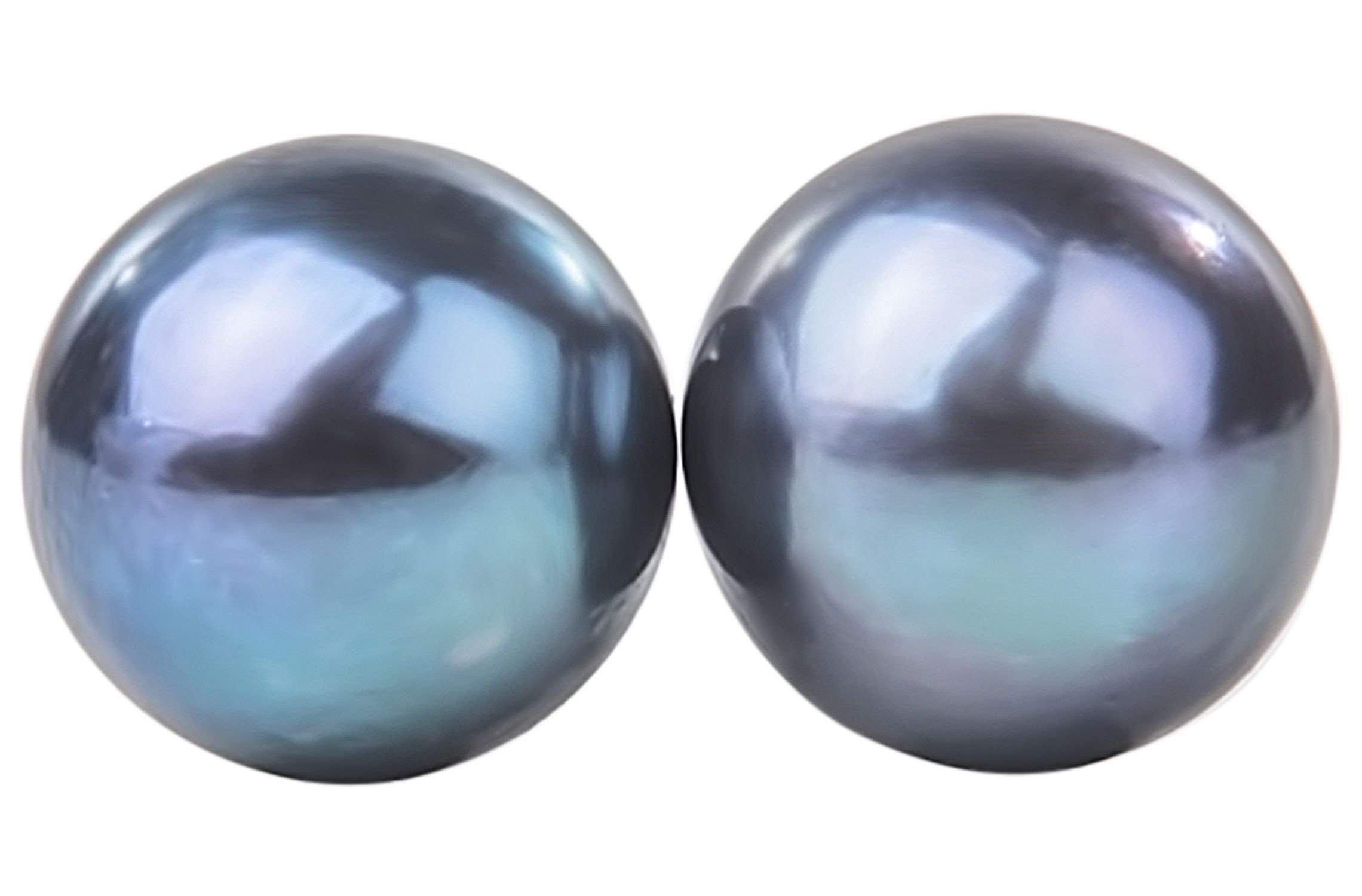
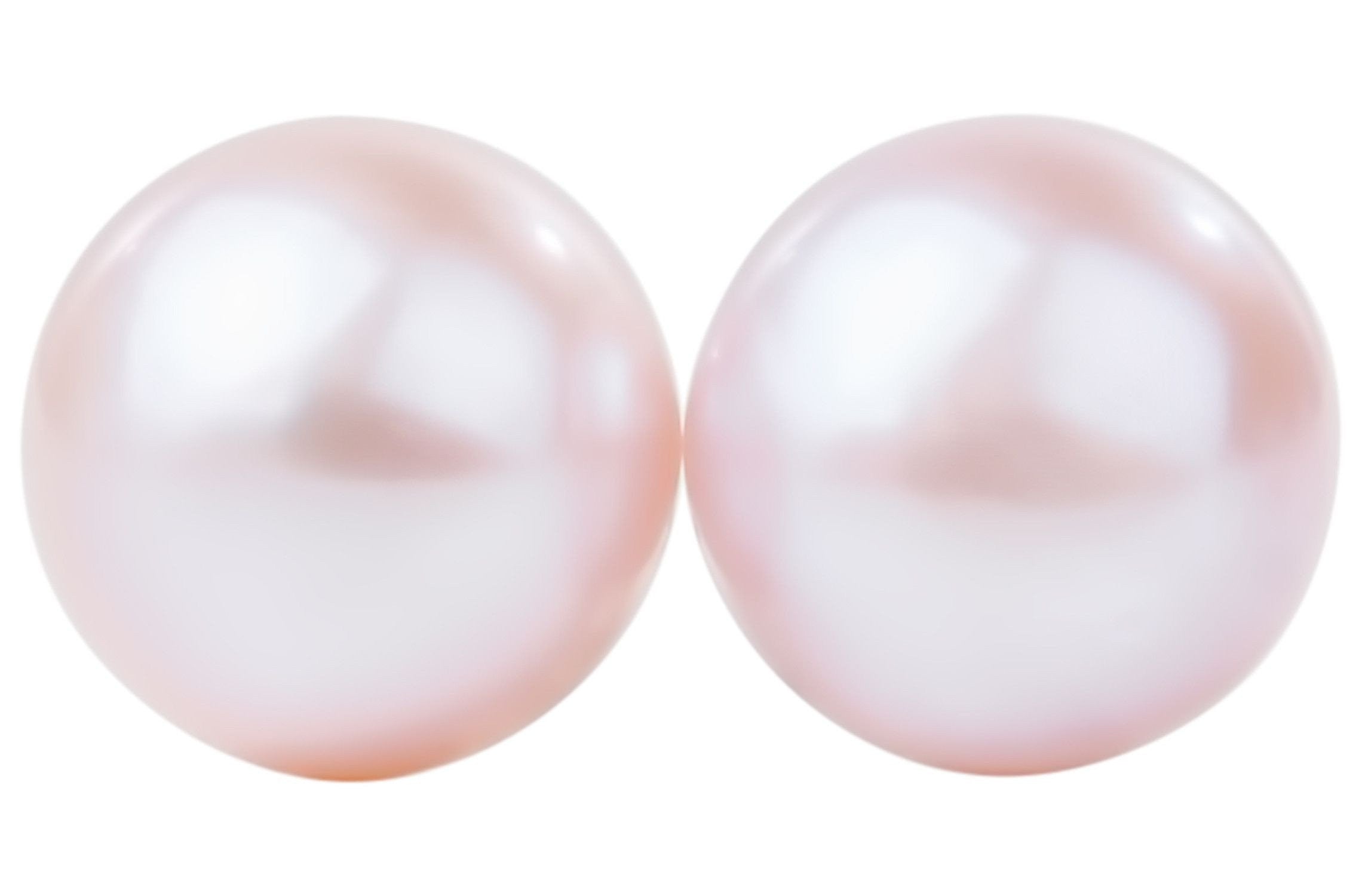
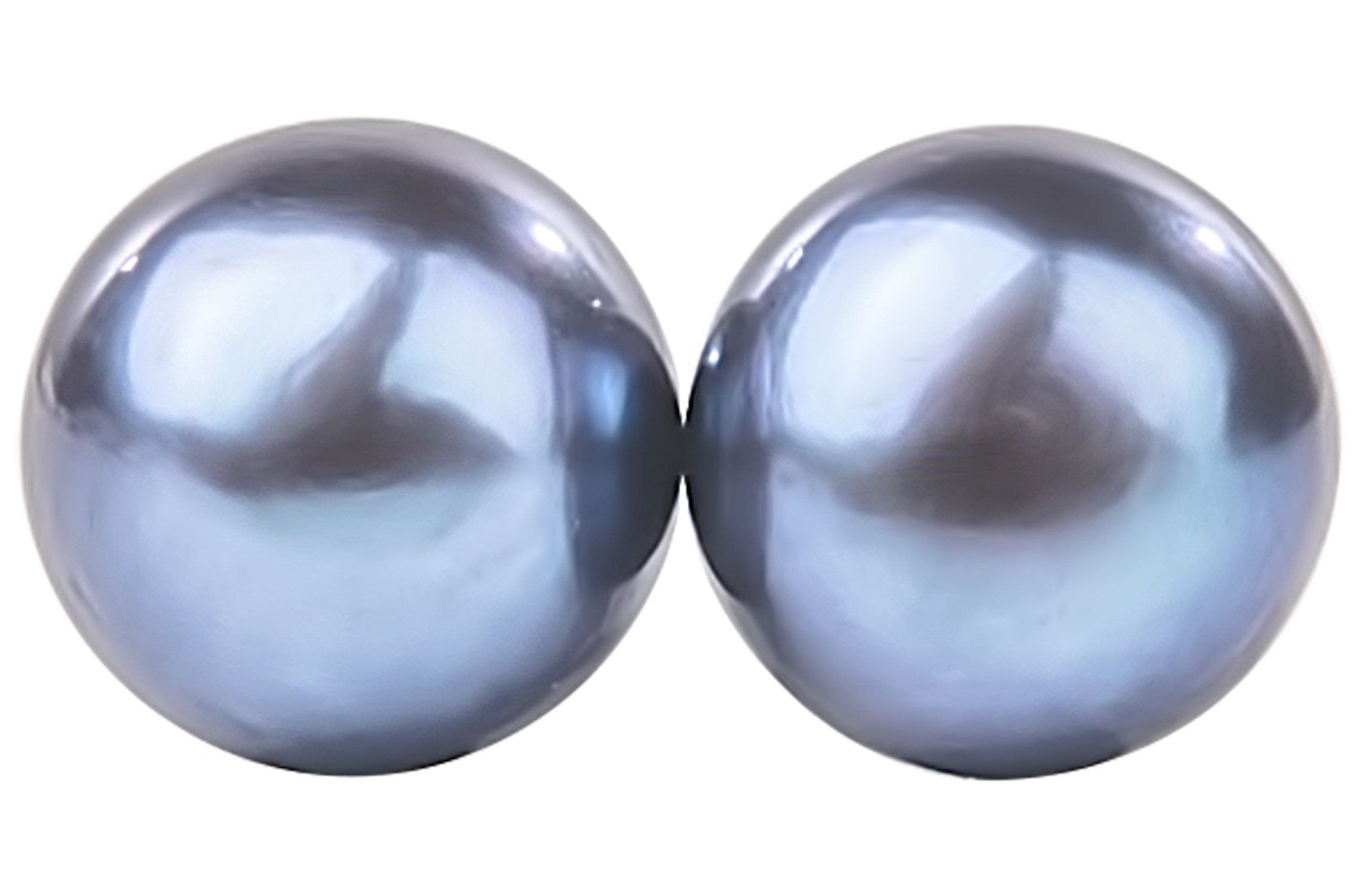
- Body color — the dominant hue: white, cream, peach, pink, lavender, silver, or treated shades such as peacock, chocolate and black.
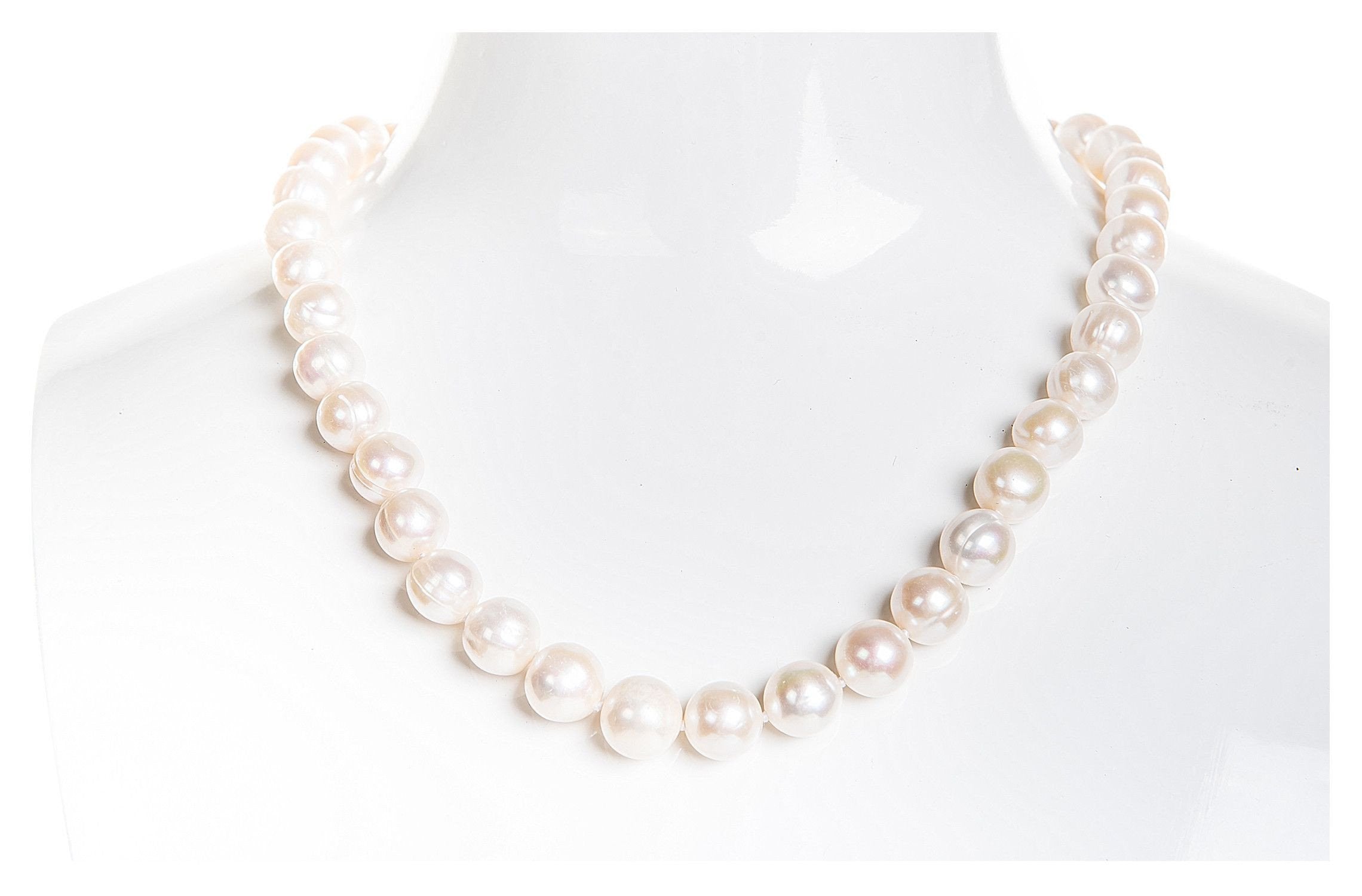
- Overtone — a translucent secondary color floating over the body, usually rose, silver or green. Rose over white is the traditional bridal look; silver over white reads cooler and more contemporary.
- Orient — the rainbow shimmer seen mainly on high-nacre baroque pearls.
See freshwater pearl colors explained for how white, pink, peach, lavender and black shades occur and which are treated.
No color is objectively better. What matters for value is that the color is even across the pearl, and consistent across the piece. Warm body colors flatter golden and olive skin tones; cool whites and silvers suit fair and cool-toned complexions.
6. Nacre thickness
Nacre is the material the mollusk secretes in microscopic layers. Thickness determines both beauty and lifespan.
Freshwater pearls are usually tissue-nucleated, meaning they are solid nacre through and through — which is why they wear well for decades and rarely peel. Bead-nucleated pearls such as Akoya have a shell bead core with a nacre coating; if that coating is thin (under about 0.4mm) the pearl can look dull, show the bead through the surface, or "blink" — flashing light and dark as it rolls past the drill hole. If you can see a faint line or a difference in tone as the pearl turns, nacre is thin.
7. Matching
For any piece with more than one pearl, matching is a craft in its own right: size, shape, color, overtone and luster should be consistent from pearl to pearl, or graduate deliberately and smoothly. Sorting a well-matched strand can take thousands of loose pearls, which is why matching quietly accounts for a large share of a strand's price.
Check a strand by laying it flat under even light and scanning down the line for a pearl that is duller, greyer or noticeably smaller than its neighbours. One mismatch tells you more about a maker's standards than any grade letter.
8. Origin
Where and how a pearl grew sets the expectations for every factor above.
- Freshwater (mainly China) — mussels producing many pearls per harvest, in the widest range of colors and shapes. Solid nacre, excellent value, sizes commonly 5–11mm.
- Akoya (Japan, China) — saltwater, bead-nucleated, famous for sharp mirror luster and round shape; typically 6–9mm, nacre thickness is the key thing to verify.
- Tahitian (French Polynesia) — naturally dark pearls in grey, aubergine, green and peacock; 8–15mm, graded on a separate A–D scale where A is the best.
- South Sea (Australia, Indonesia, Philippines) — the largest cultured pearls at 9–20mm, in white, silver and golden, with a soft satin luster.
- Natural (wild) — formed without human intervention; effectively collector items sold at auction.
Deciding between the two most common options? Compare them in freshwater vs. Akoya pearls, and if you are checking authenticity see how to tell if freshwater pearls are real.
Origin also affects treatment norms: many freshwater pearls in vivid colors are dyed or irradiated, which is standard practice and perfectly acceptable when disclosed.
A note on grade letters
The familiar AAA–A scale is a retailer convention, not a standard. One seller's AAA can be another's AA, and "AAAA" is marketing. Grades are useful for comparing pieces within one seller's range and unreliable across brands. Labs such as GIA deliberately avoid a single letter, describing each of the factors above separately instead. We break the scales down in AAA, AA, A: what pearl grading letters actually mean.
How to apply this when you shop
- Judge luster first — from photos with real, defined reflections rather than diffuse studio glow.
- Check surface and matching next; these are where corners get cut.
- Treat shape, size and color as preference, not hierarchy — a baroque strand can outperform a round one on beauty per dollar.
- Confirm nacre for any bead-nucleated pearl; assume solid nacre for freshwater.
- Read the origin and treatment disclosure. Clear specifics beat impressive letters.
At Pearl Rack we describe every piece by its actual measurements, shape, color and finish, and select on luster and matching before anything else. That is what affordable luxury means to us — you should know exactly what is arriving in the box. Once your pearls arrive, keep them bright with our pearl care guide.