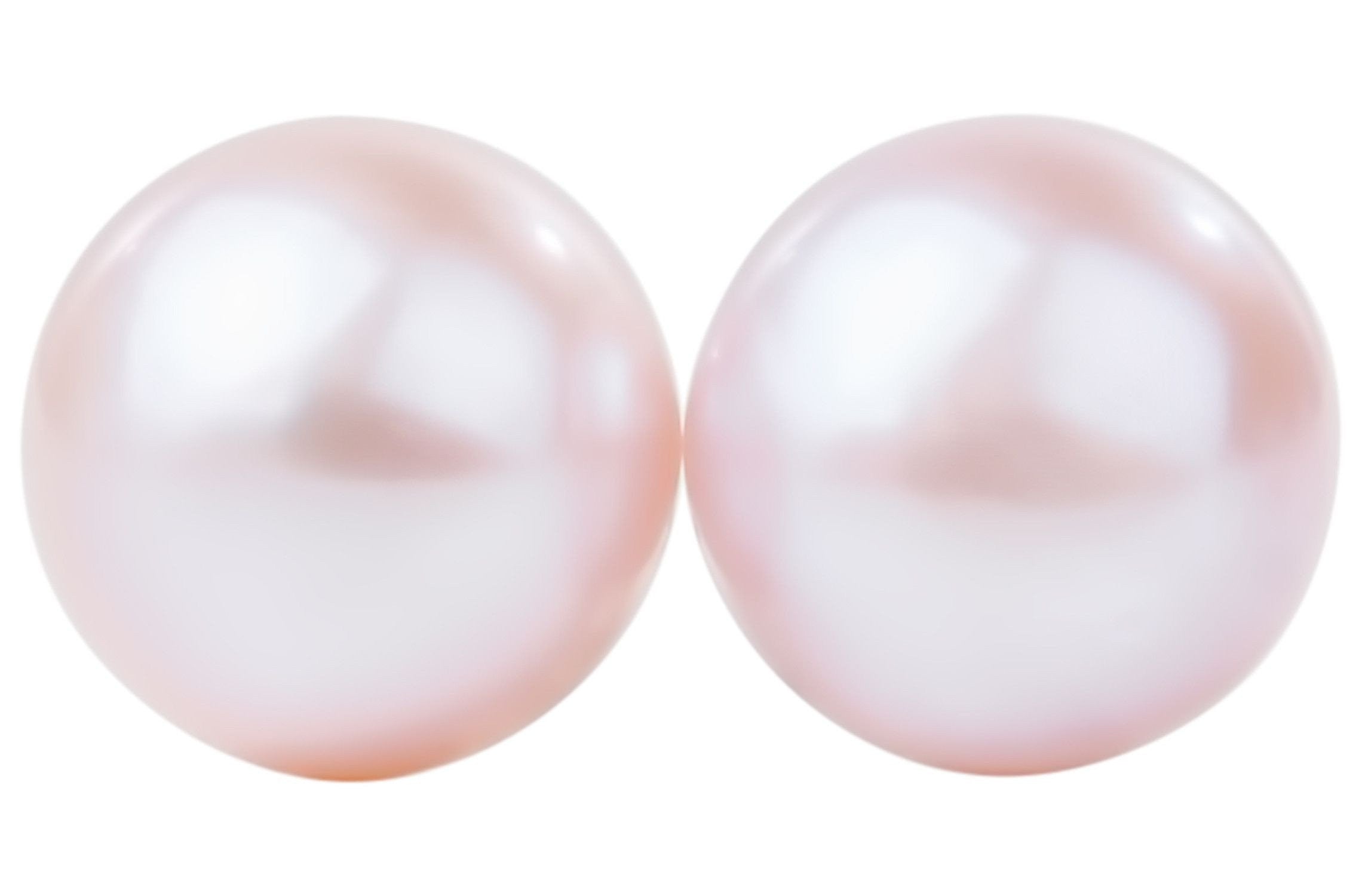
A freshwater pearl starts as an irritant, a tiny bit of tissue, tucked inside the soft mantle of a mussel living in a pond or slow river, mostly in China's Hunan and Zhejiang provinces these days. The mussel reacts by coating that irritant in nacre, layer after layer, for a few years. That coating is the pearl. No sand, despite what everyone tells you at parties. Farmers implant the tissue by hand, then wait.
Here's the part that surprises people: an oyster used for saltwater akoya pearls typically produces one pearl at a time. A freshwater mussel can carry ten, twenty, sometimes forty grafts in its mantle tissue at once, one on each side, in neat rows. That's why freshwater pearls are cheaper to produce and why strands can be assembled with real consistency, bead to bead. It's also why so much freshwater production is nacre through and through, with no bead nucleus at the center on most (not all) modern strands, just solid nacre built around the graft tissue itself.
Good strand, great strand
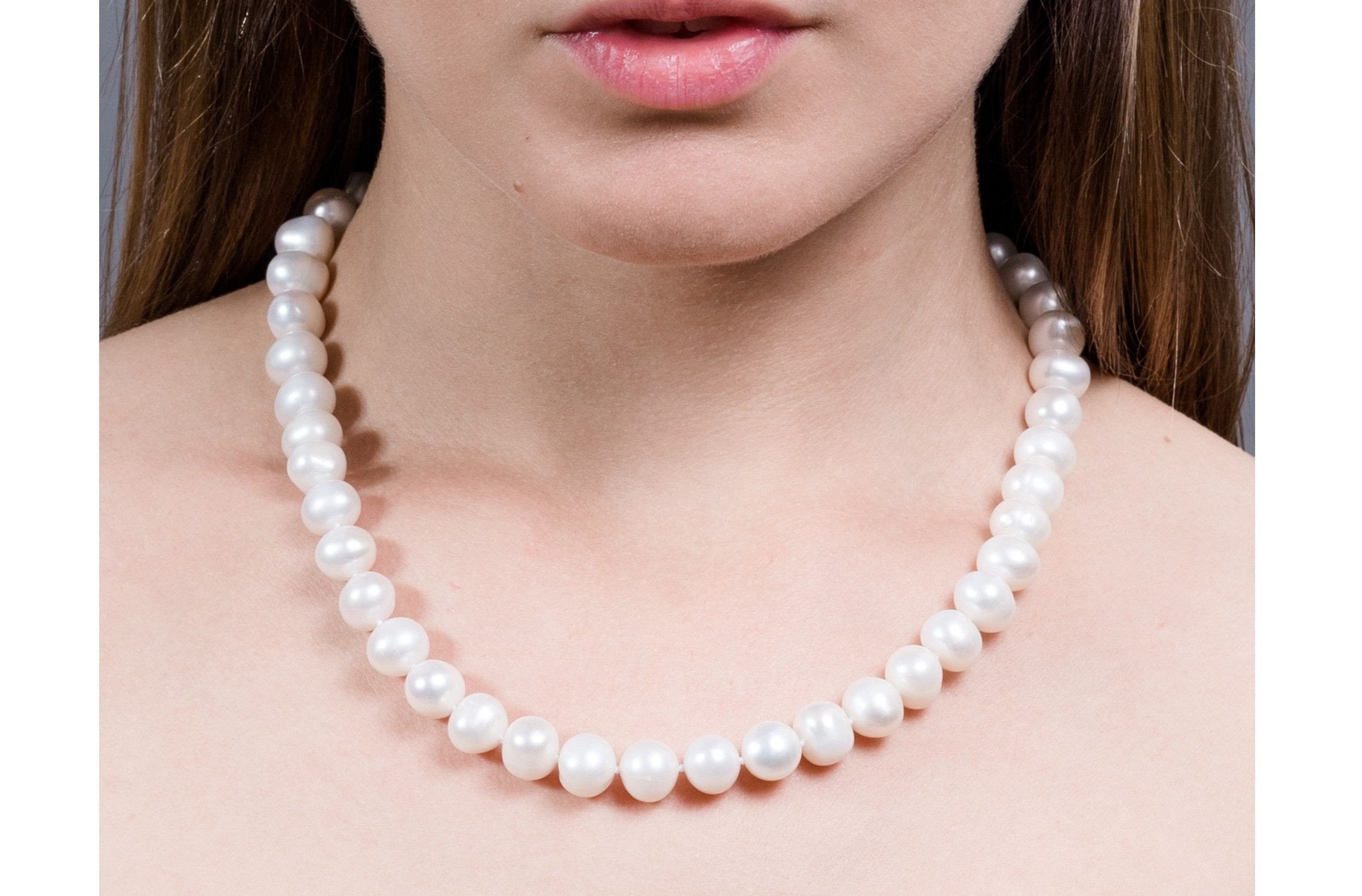
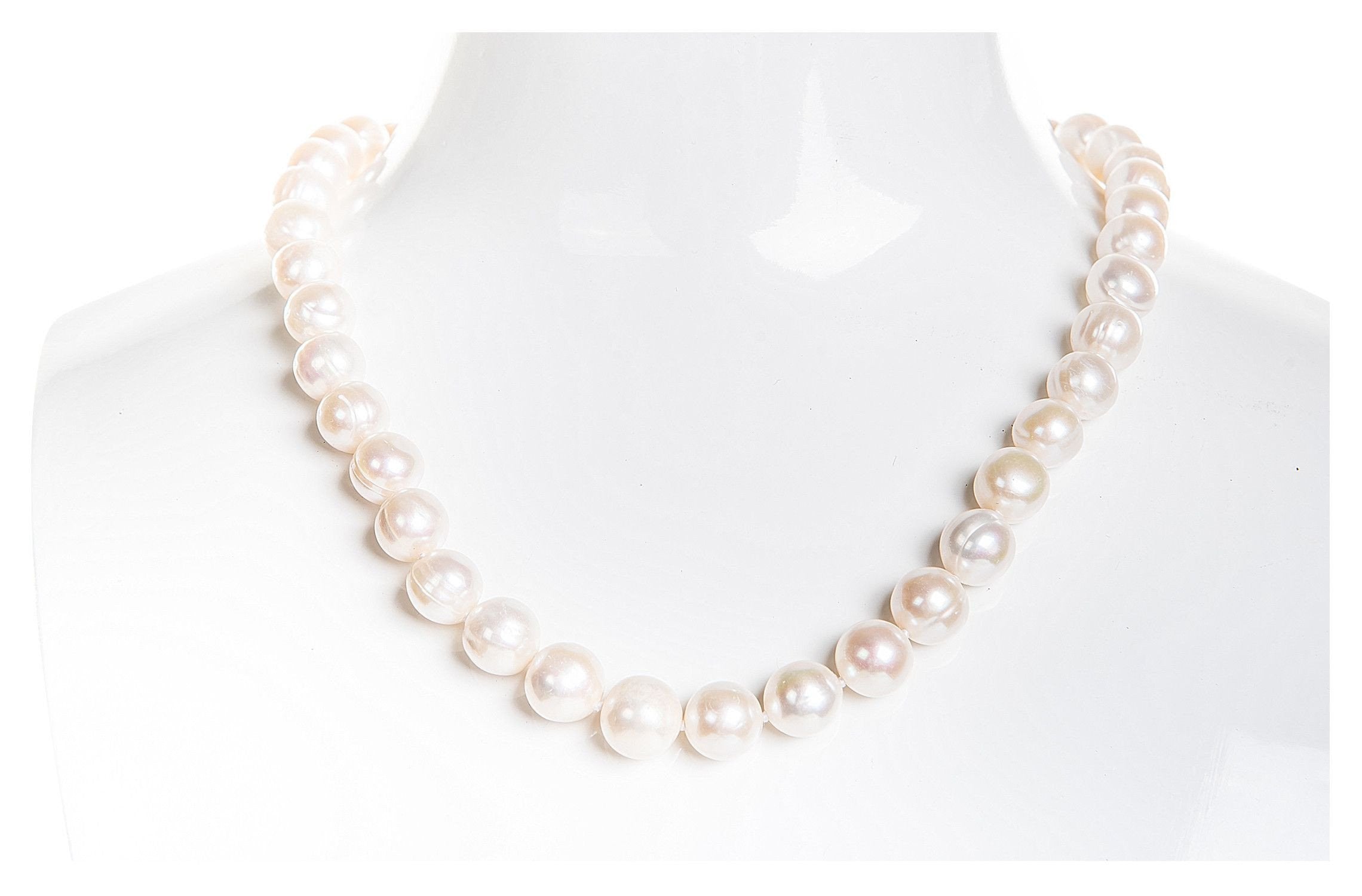
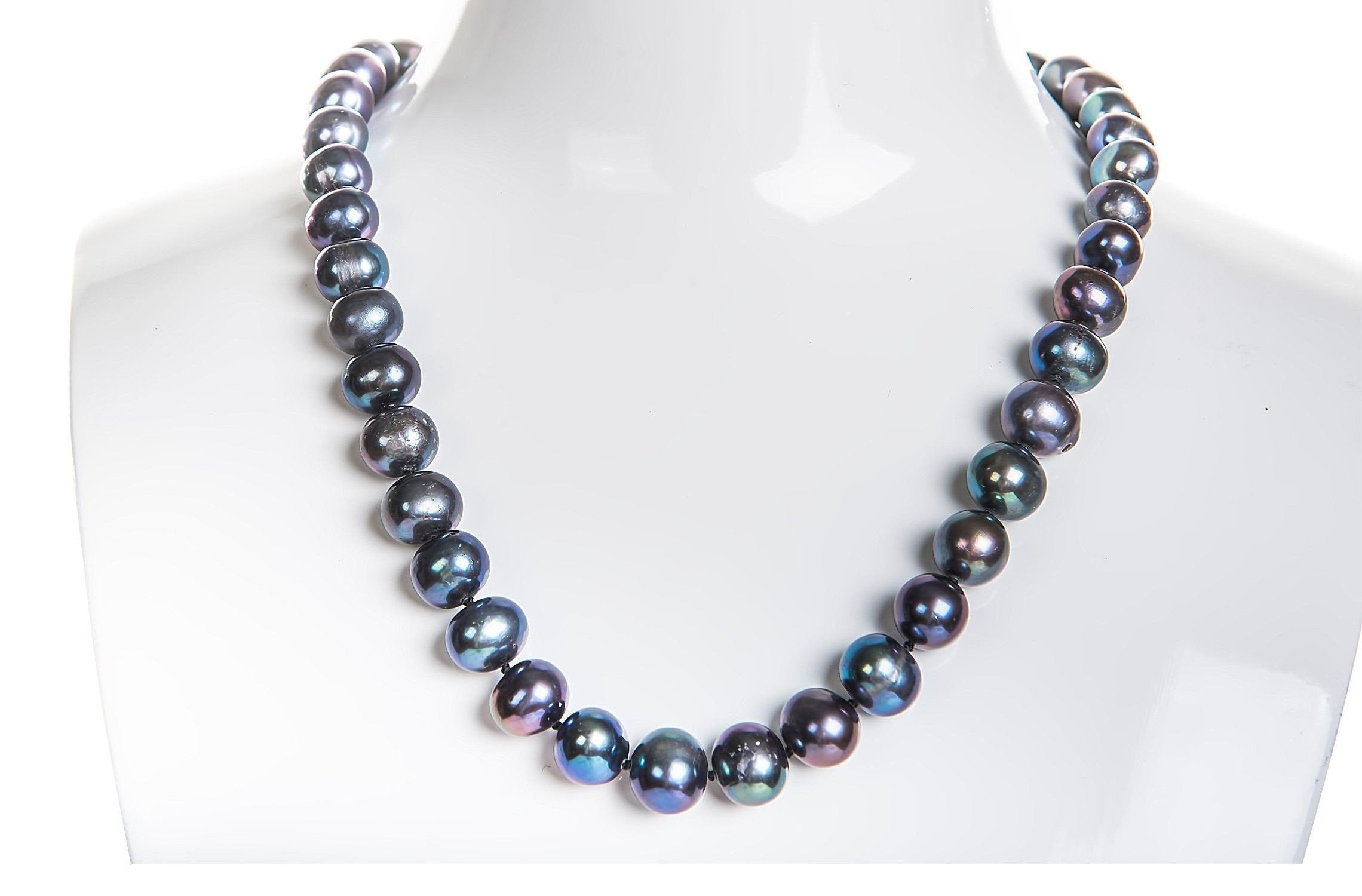
Once the mussels are harvested, someone has to sort thousands of pearls by hand into batches that will eventually become one necklace or bracelet. A good strand looks fine at a glance. A great strand holds up to a longer look:
- Shape matching. Pearls don't have to be perfectly round to be good, but within one strand the shapes should repeat evenly, not swing from near-round to lopsided.
- Surface. Hold it under a lamp and rotate slowly. A few faint growth lines are normal. Pitting, cracks, or chalky patches are not.
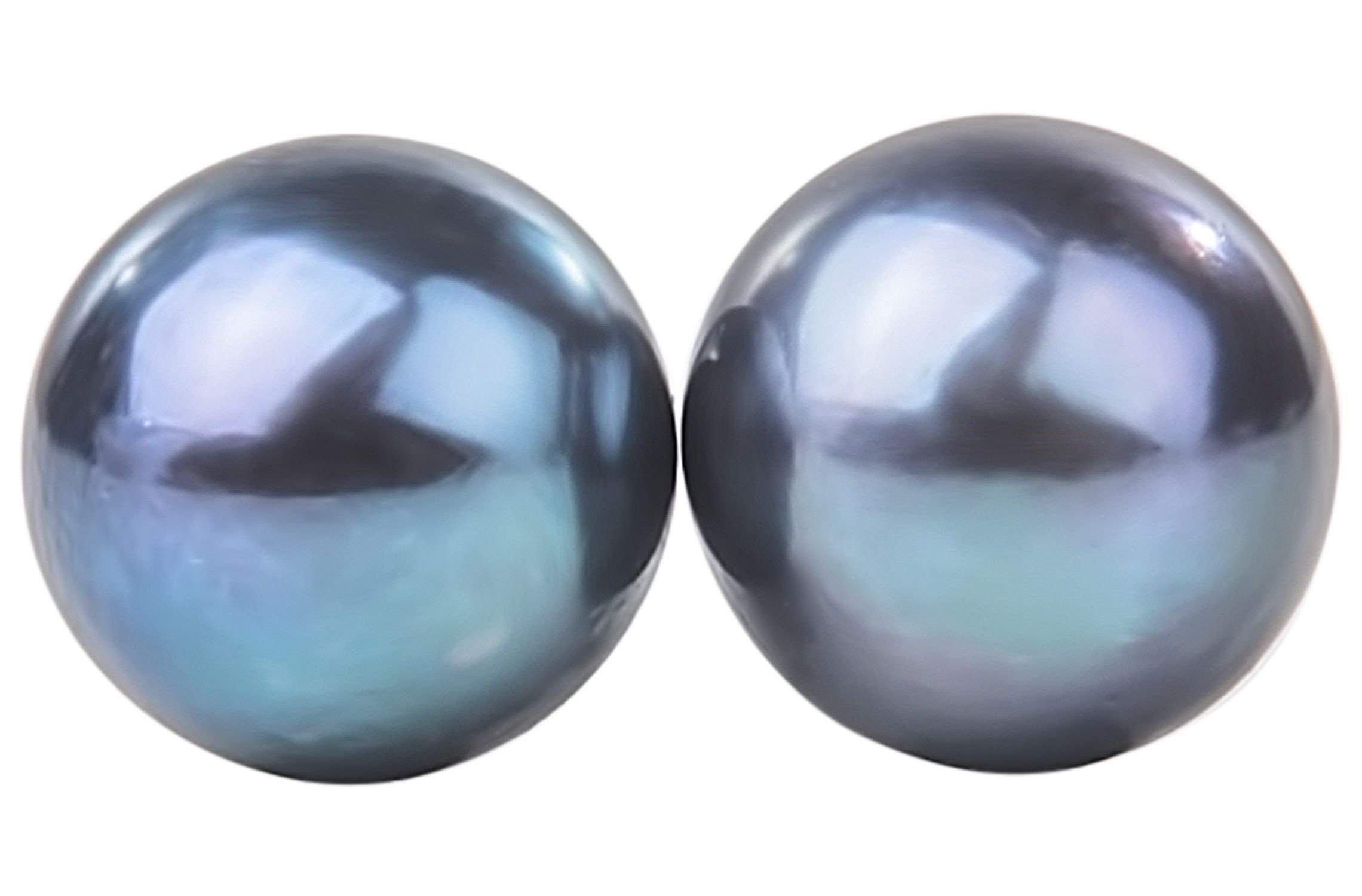
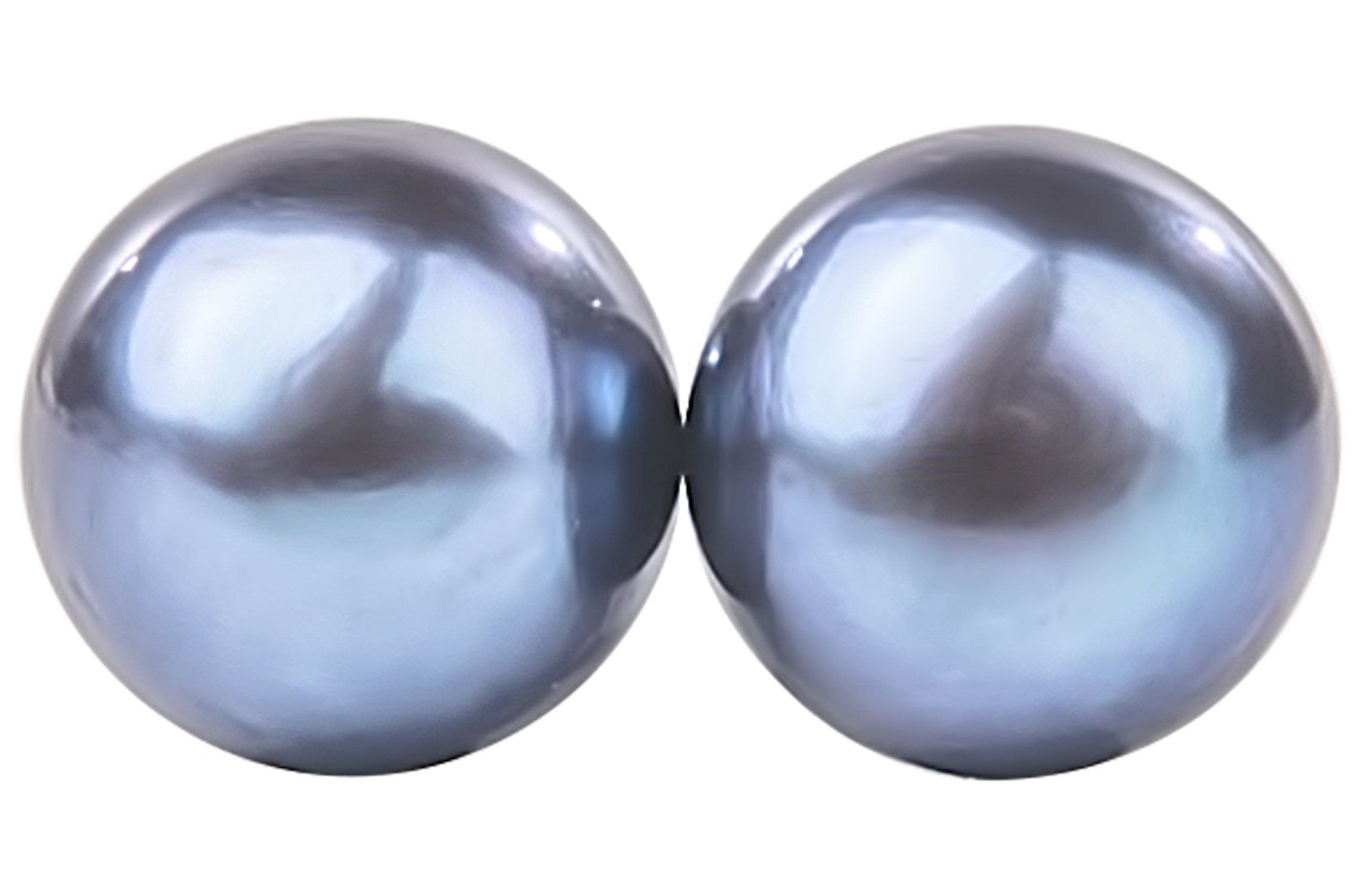
- Luster. This is the reflection quality on the surface, and it's the single biggest driver of how a pearl reads from across a room. We go into it in more depth in our guide to pearl luster.
- Color consistency. Natural freshwater pearls come in white, cream, pink, peach, and lavender tones. A great strand keeps the color even from end to end rather than drifting.
- Knotting. A hand-knotted strand has a small silk or nylon knot tied between each pearl. That's not decoration. It stops the pearls from grinding against each other and keeps the whole strand from spilling across the floor if the thread ever breaks.
What to check before you buy
Roll the strand on a flat surface. Uniform, well-matched pearls roll in a smooth, predictable line. Look at the drill holes too, they should be centered and clean, not chipped or off-axis, which tells you something about the care taken at the drilling stage, not just the growing stage.
Ask what the pearls are strung on. Silk stretches slightly with wear and needs replacing eventually; nylon holds up longer but has a slightly different hand-feel when you're knotting close to the bead. Ask whether the clasp is sterling silver or plated base metal, since that's often where corner-cutting happens on cheap strands.
If you want to sanity-check whether something being sold as freshwater pearl is actually pearl at all, our piece on how to tell if freshwater pearls are real walks through the tooth test and a few other quick checks you can do at home before you commit to a strand.
We started Pearl Rack on Canal Street in New York City, and we still hand-knot every strand ourselves. Every piece is genuine cultured freshwater pearl finished with sterling silver. Right now everything we make is sold out while we restock, but you can see what's coming back in our collections, and if you have questions about a specific strand, just reach out.