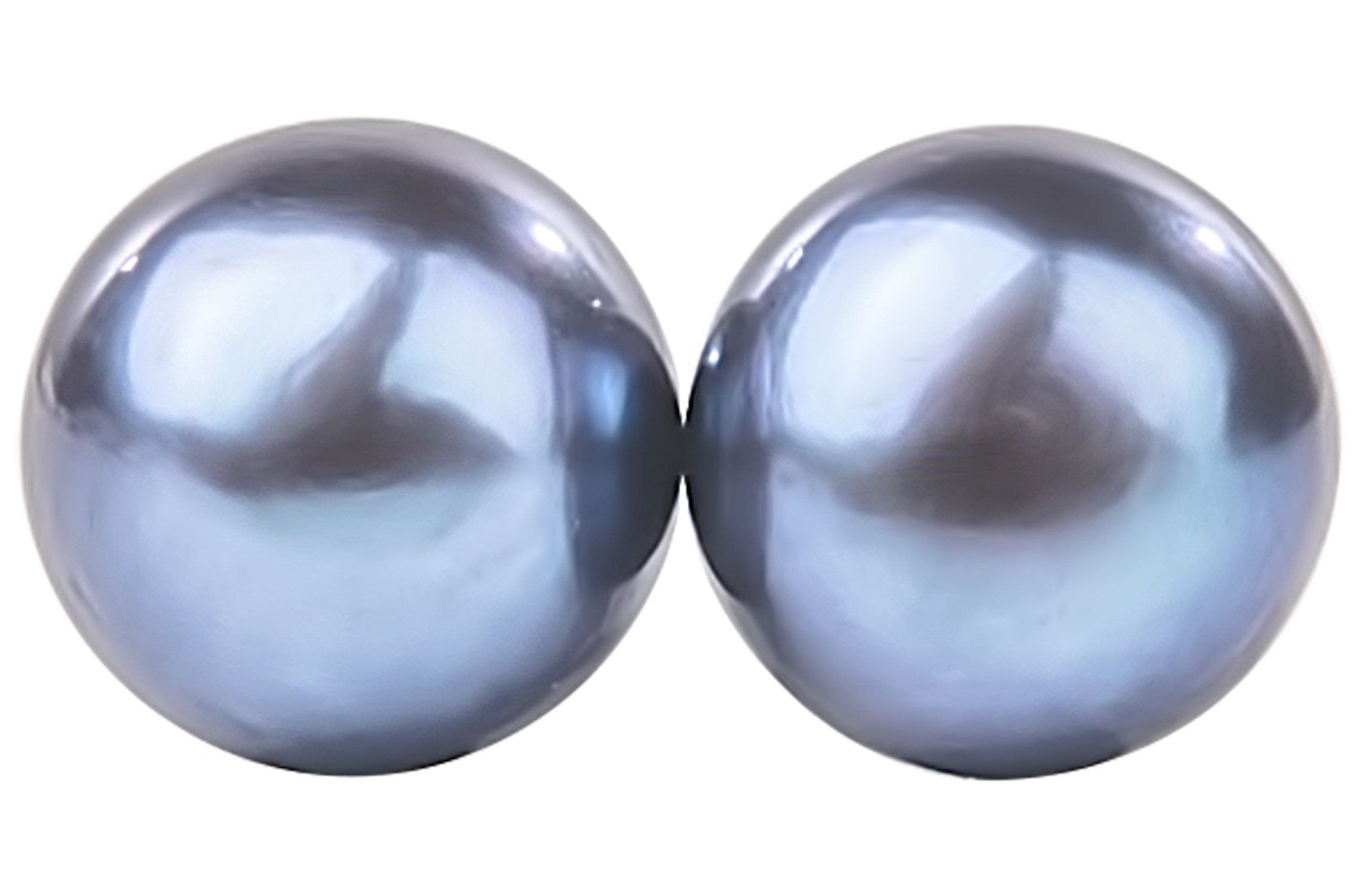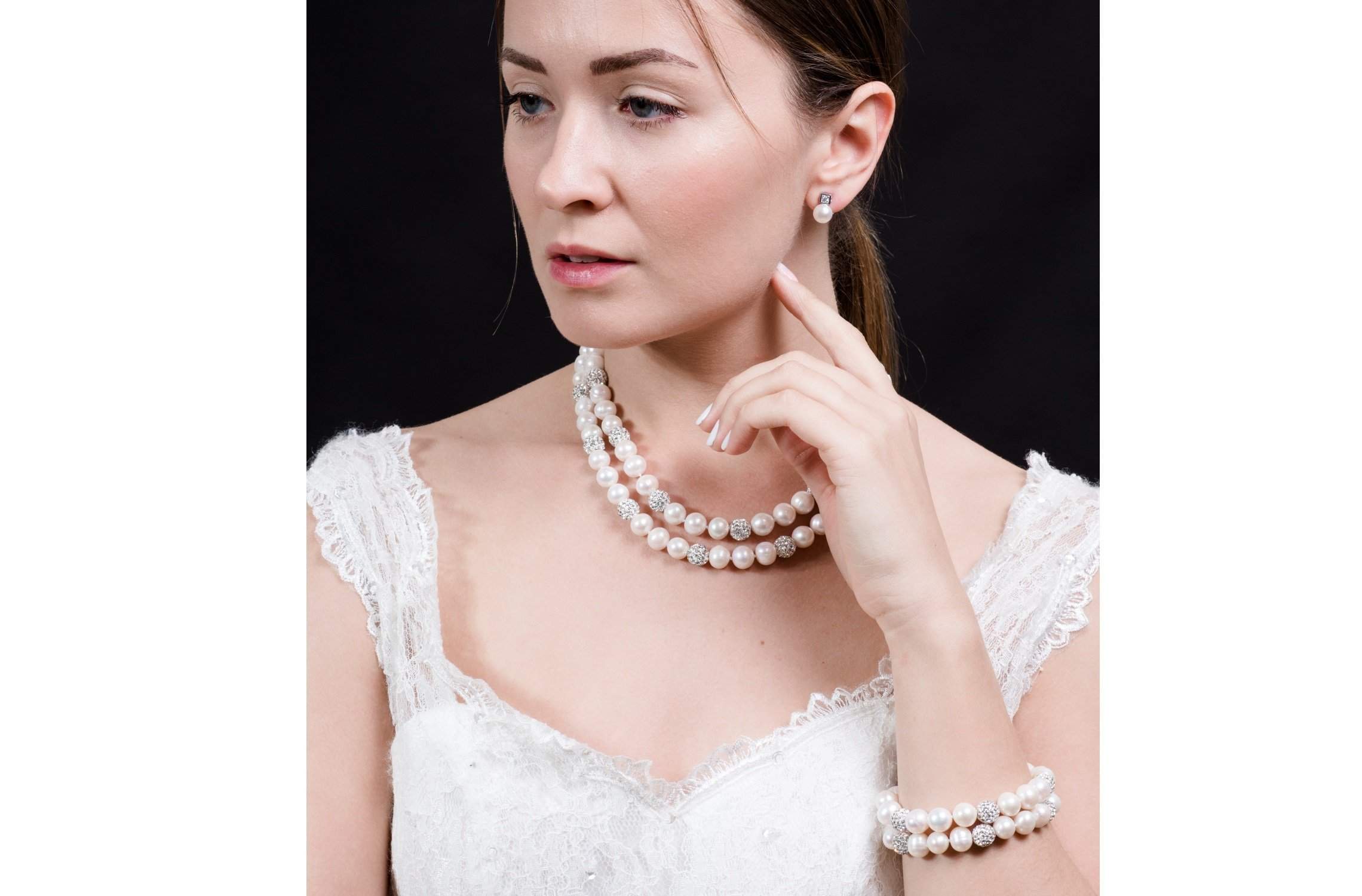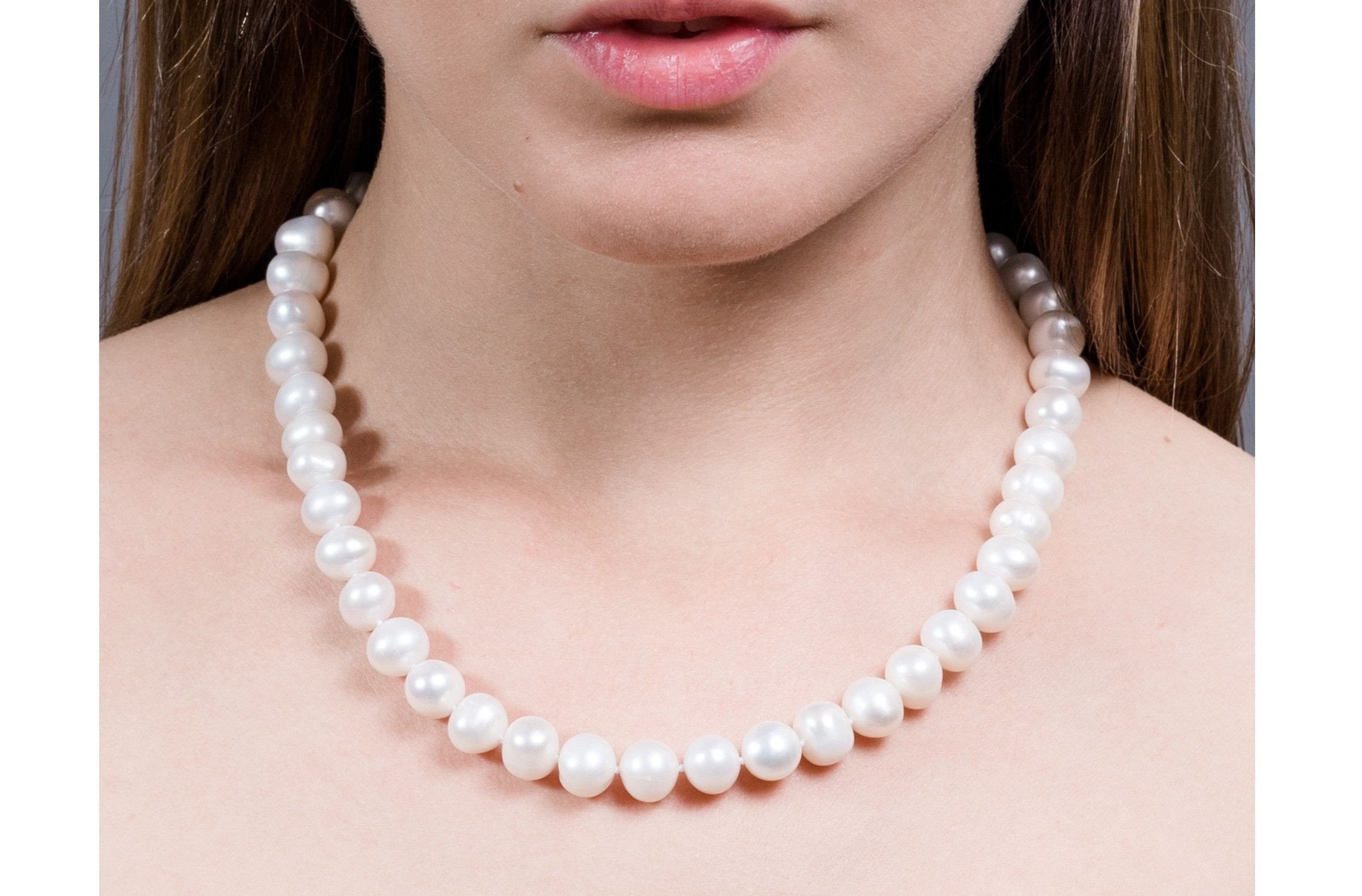
A single strand of pearls does not know or care whether you are heading to a client meeting or standing in your kitchen in a denim shirt making coffee. That is the whole trick of them. Pearls read as effortless in a way that most jewelry does not, and once you stop treating them as a "special occasion" item, you end up wearing them a lot more than you'd think.
Start with one strand and ordinary clothes
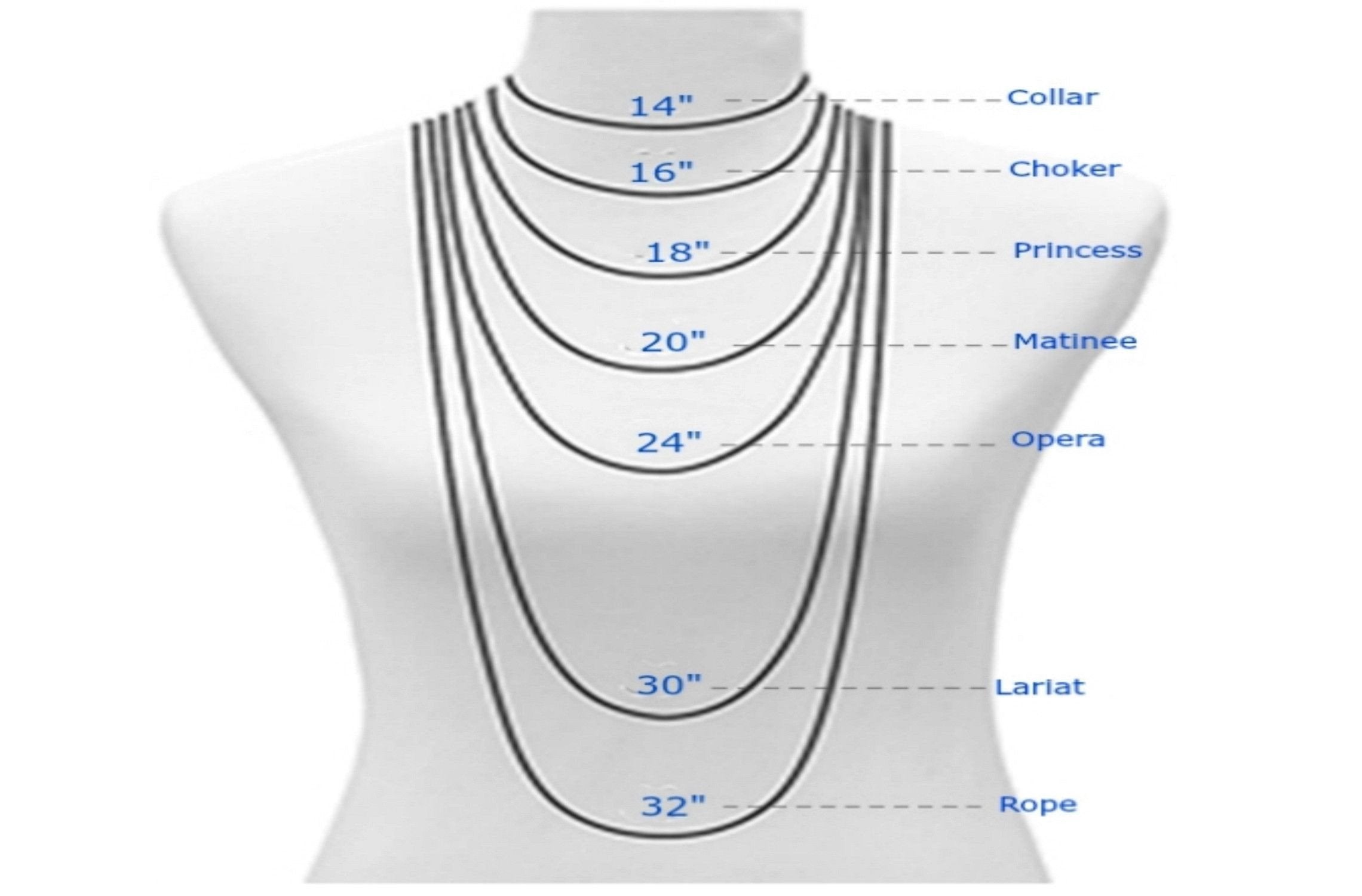
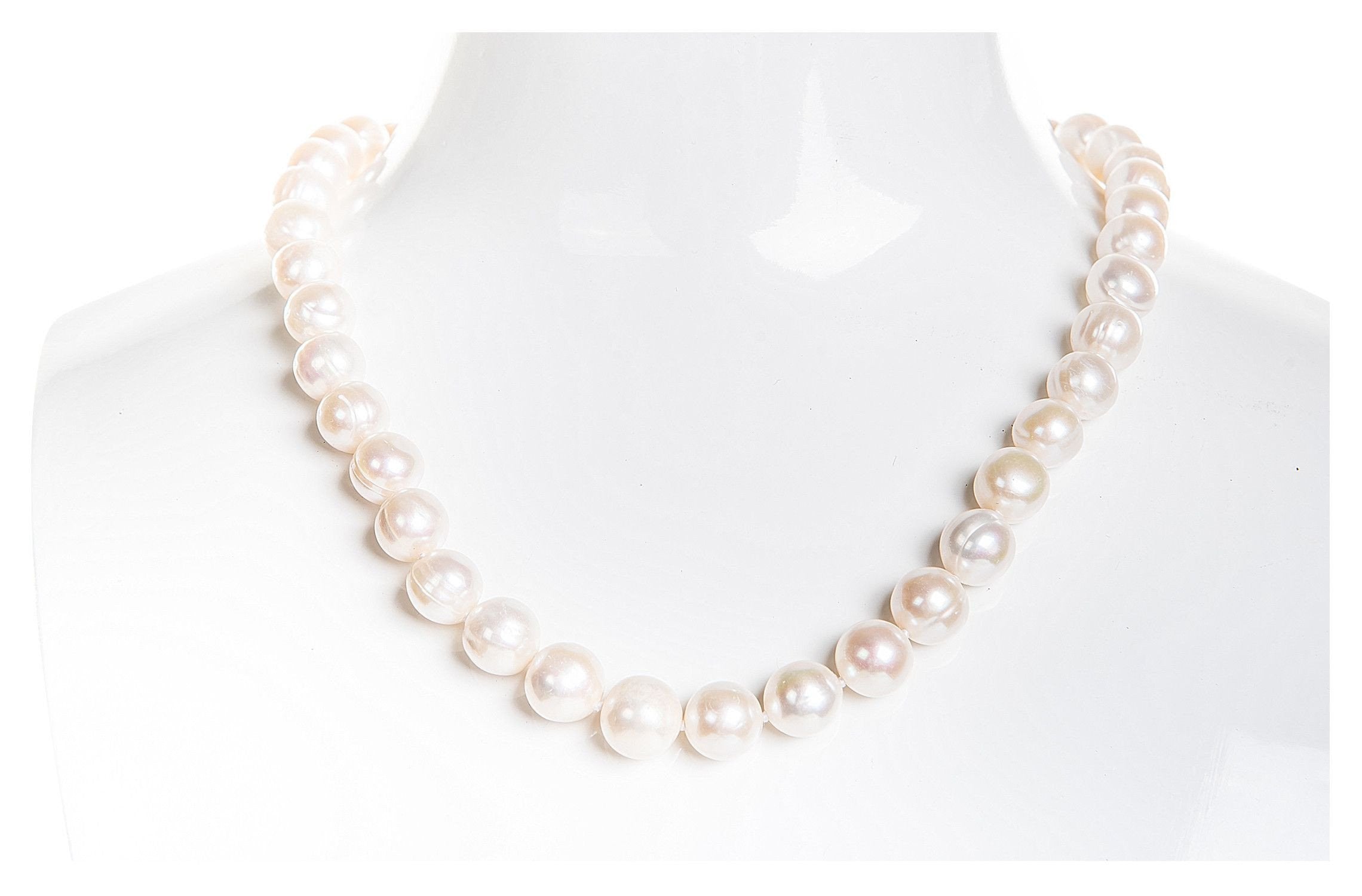
The fastest way to get comfortable with pearls day to day is to put an 18" strand of 7-8mm freshwater pearls over a plain crewneck or an oxford cotton shirt with the top button undone. That length sits right at the collarbone, which is exactly where it should land against a round or v-neck. No blazer required, no dressing around it. It just sits there and does its job.
For work, the same 18" strand under a cardigan or a tailored jacket reads as put-together without looking like you tried. If your office skews more casual, a 16" choker-length strand with a silk blouse does something similar but closer to the neck, which we like with open collars.
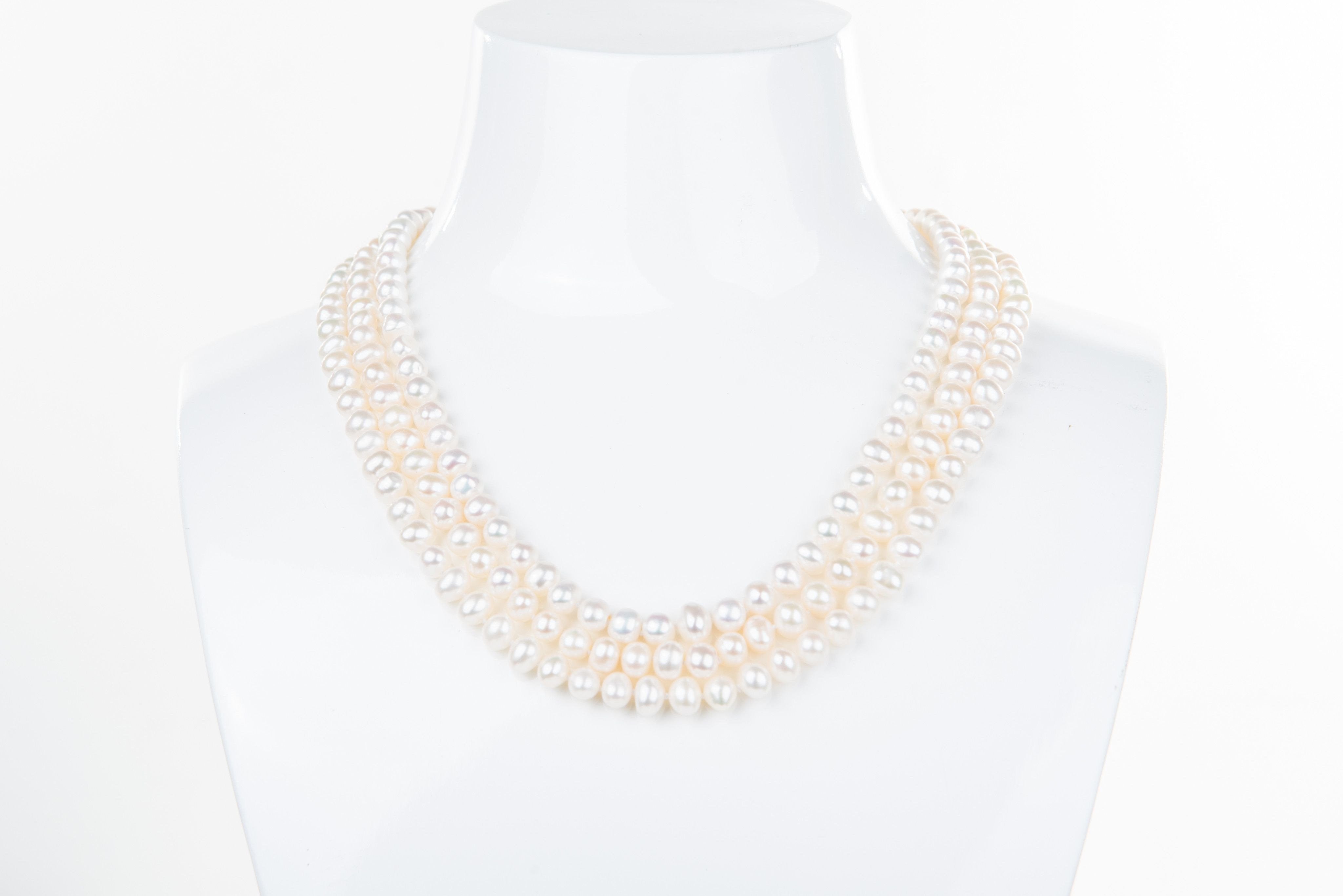
Evenings are where you can go longer or double up. A 24" or 36" strand knotted between an off-the-shoulder top or a simple silk slip dress has more presence, and a 36" rope can be wrapped twice to sit like two shorter strands without buying two necklaces.
Layering lengths without looking costume-y
The rule that actually works: pick lengths that differ by at least two inches so they don't fight for the same spot on your chest. A 16" and a 20" together is a good starting pair — one sits at the base of the throat, the other drops just below it. Keep the pearl sizes close in scale, 6-7mm and 7-8mm, so nothing looks like it wandered in from a different jewelry box.
If you want a third layer, go shorter and more delicate rather than longer. A thin sterling silver chain tucked behind an 18" pearl strand adds a bit of shine without competing.
Mixing pearls with silver, on purpose
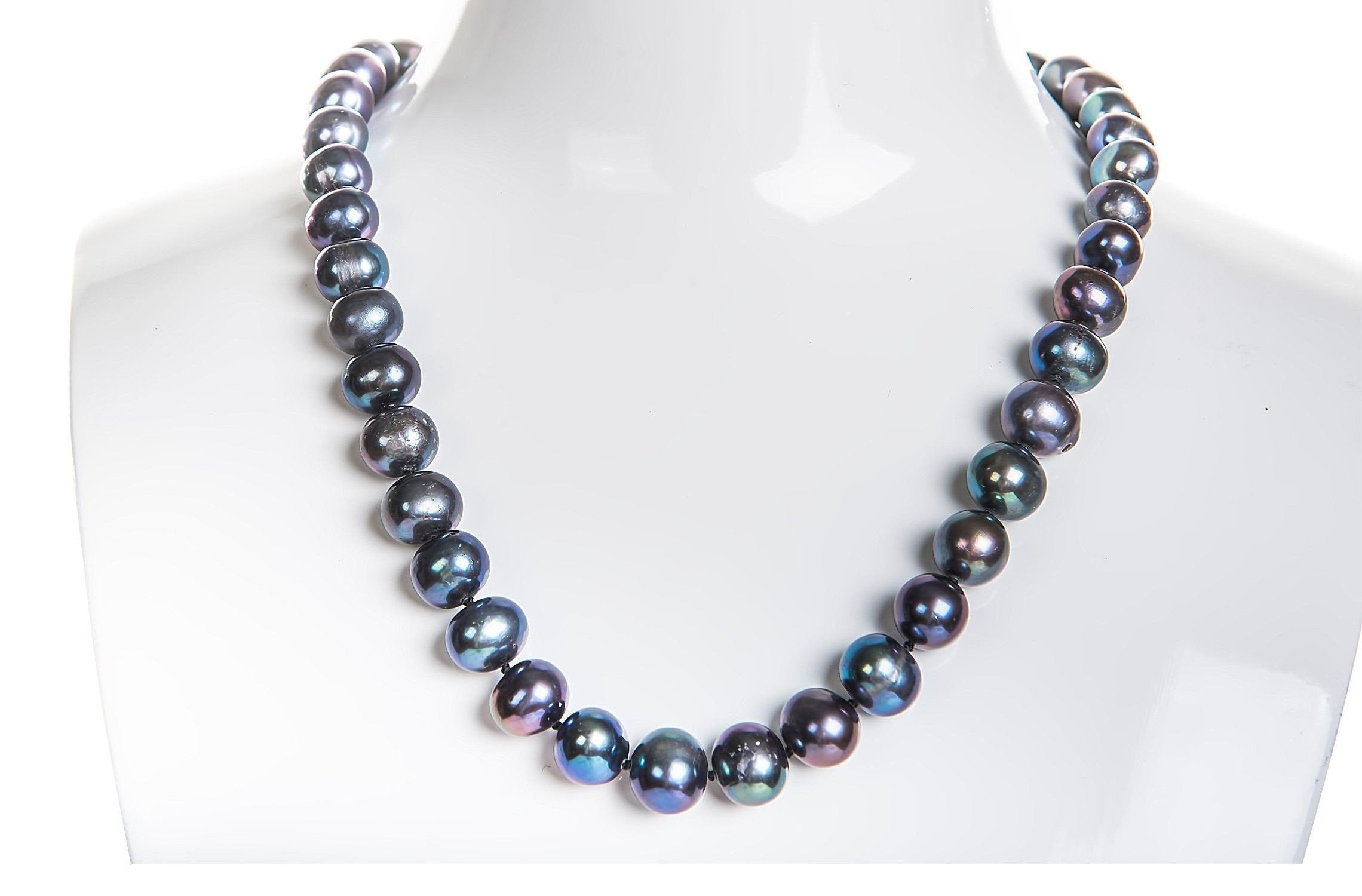
Genuine cultured freshwater pearls hand-knotted on silk with sterling silver clasps already have metal built into the piece, so pairing them with silver stud earrings, a slim silver cuff, or a silver watch is not really "mixing," it's just finishing the thought. What we'd avoid is stacking pearls next to warm gold in the same look unless you're deliberate about it — a little contrast is fine, a lot just looks unplanned. If you're building out a wardrobe of pieces that lean easy and feminine rather than fussy, Divinita is worth a look for the kind of simple everyday pieces that sit well next to pearls without competing for attention.
What not to do
- Don't wear pearls with heavy statement jewelry in the same category — one pearl moment per outfit, not three.
- Don't let a strand hang loose against a turtleneck; it needs a neckline it can actually rest on.
- Don't store a strand knotted up with other necklaces in a drawer — the silk stretches and pearls chip against harder stones. A soft pouch, laid flat, is enough.
- Don't spray perfume directly onto pearls or let hairspray settle on the strand. Put fragrance on first, jewelry second.
If you're not sure what separates a decent strand from a mediocre one, our pearl grading guide walks through luster, shape, and surface quality in plain terms. And because a hand-knotted strand needs a little more attention than a plastic-clasped chain necklace, it's worth reading through how to care for freshwater pearl jewelry before it becomes part of your daily rotation.
Right now everything at Pearl Rack is sold out while we restock — we hand-knot every strand ourselves out of our original Canal Street setup in New York, so restocking takes real time rather than a warehouse reorder. Browse the collections to see what's coming back, or check baroque pearl jewelry if you want something with a bit more texture and irregularity than a classic round strand. Questions about sizing or lengths for layering — get in touch.